Nine grand down because I went to university to study English Literature, and I’ve written about literature twice on this blog. Twice. That means each piece is currently worth around £4500. To get more money’s worth out of my degree, I’m today going to write about Cormac McCarthy’s No Country for Old Men.
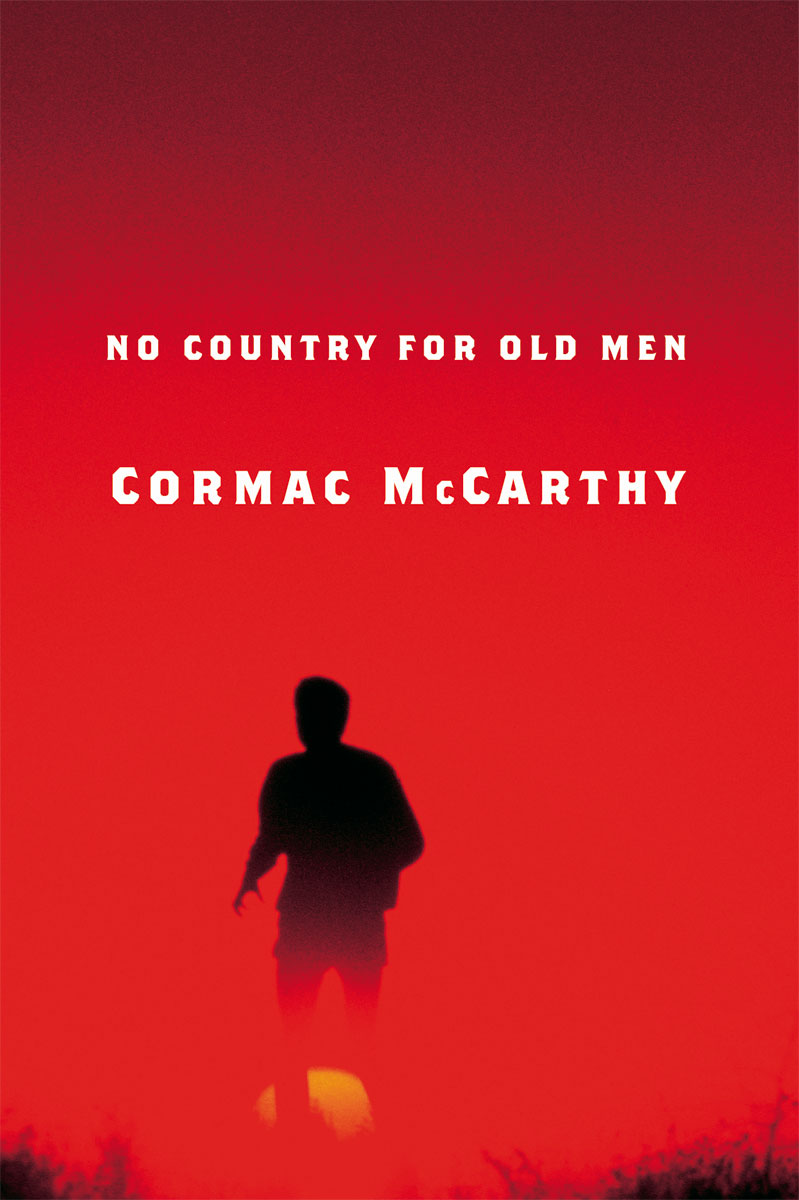
Having seen the film, my imagination had been restricted For instance, I could’t imagine Sheriff Bell as anyone other than Tommy Lee Jones. I tried to get around this by putting a moustache on the character, but he was still Tommy Lee Jones. I’ll assume most of you have watched the film, so I’ll just go over what struck me as I read the novel.
Defeat. That’s the theme that kept coming up as I read through. It came across much more than it did in the Coen brothers’ adaptation (which, it has to be said, was astonishingly faithful). Each of the main characters experiences some form of defeat.
What the book seemed to say is that defeat is inevitable. Time is relentless, even the strong and fast will eventually become slow and weak. One day you’ll encounter someone much stronger than you are, and you won’t be able to defend yourself or your ideals. You’ll die and be forgotten, and your actions will amount to little more than words scribbled in the dust.
Hardly Harry Potter, is it?
McCarthy’s prose is an odd little bugger. It goes against most of what I was taught in primary school: ‘use commas to separate clauses’, ‘speech marks to indicate when someone is speaking’, ‘try not to use more than one “and” in a sentence’. But then McCarthy breaks all of these rules. As a result, though he’d have probably got a right bollocking off of Mrs. Donaldson, it works to great effect. The writing flows and has a very oral feel, as if someone from the America/Mexico borderlands is sat telling you the story.
McCarthy also has an amazing knack for tension. You’ll probably remember the chilling Chigurh if you’ve seen the film. In the novel, I lost count of the times he was having a conversation with another character, only for the narrative to jump to what Chigurh’s doing five minutes later. You often have no idea what’s happened to the character until a few pages on, and it usually isn’t pretty. Like a clever filmmaker, McCarthy’s more than happy to allow your mind to fill in the blanks and unnerve itself.
If you’ve already seen the film, you can treat this novel as the director’s cut. It’s not massively different, but you get more monologues from Sheriff Bell. You also get more insight into how Chigurh’s mind works– you won’t understand him any more than you did watching the film, but you’ll hope that there aren’t really people like him. It’s worth reading just to experience the exhilarating way McCarthy writes.