A few weeks ago, I did something that I’m not proud of: I wrote a clickbait headline.
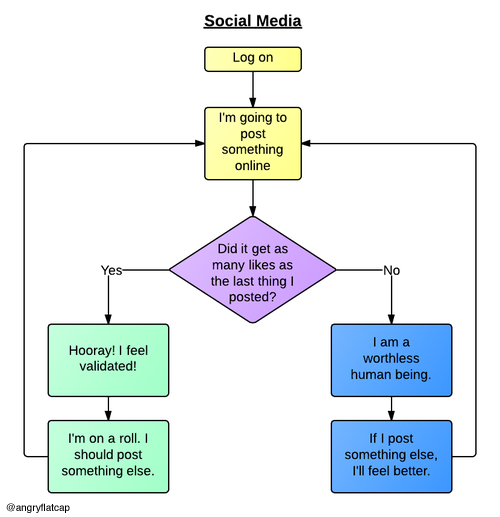
As a blogger and social media user, my self-worth is tied both inextricably and inexplicably to the number of Likes that I receive:
The blog itself did pretty well. It was one of the most popular ones I’ve done for a while. But any pride I felt was outweighed by self-loathing. This was the headline:
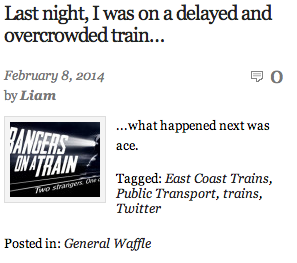
If you’ve managed to avoid the term ‘clickbait’, here’s how I understand it: clickbait is when a site uses a headline that feeds you just enough information to get you interested, and then chucks in a ton of hyperbole to entice you to click. Or they might issue you with a challenge. It’s very formulaic. Here are some prime examples from the main culprit, Upworthy:
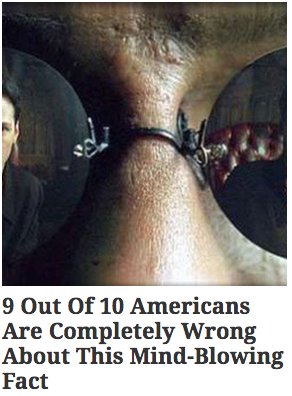

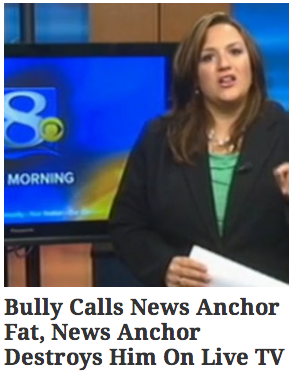

No doubt you’ve seen your friends sharing these on Facebook or Twitter. You might have even shared some yourself. Hell, I can’t judge you– I just told you how I wrote one.
It’s a simple formula, and it’s effective. It can even make my mornings seem exciting:
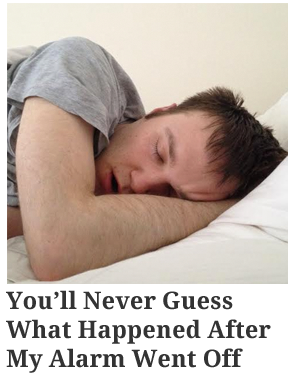
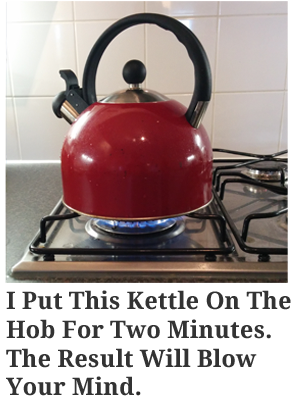
Understandably, Upworthy doesn’t like being called clickbait. In a blog post, it argued that the pieces it puts up wouldn’t go viral unless the content was worthy of a share. Fair point, but they have to get people to click on the links in the first place. In an age where traffic=revenue, Upworthy’s headlines are the key to its success. It uses its traffic to make a business case for sponsored posts, like the one it did for Skype.
It is definitely not your traditional news outlet. Nor does it want to be. Give its mission statement a read, some bits are pretty sinister:
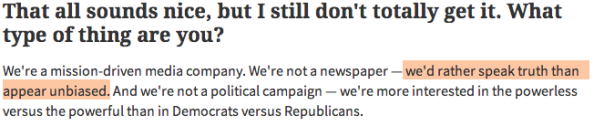

Jesus.
So what makes the Upworthy-style headlines so popular? FOMO.
FOMO: the Fear Of Missing Out. It’s the impulse that makes so many of us check Twitter and Facebook so regularly. It’s why we are glued to our phones. It’s why so many office workers can’t go ten minutes without taking a look at a news website. It’s a constant fear that if you’re not connected and informed at any given moment, something really important will be taking place and you will be left behind.
Major news outlets have been trying to harness the power of FOMO. Unfortunately they tend to cover less uplifting topics than Upworthy. Welcome to the internet of today:
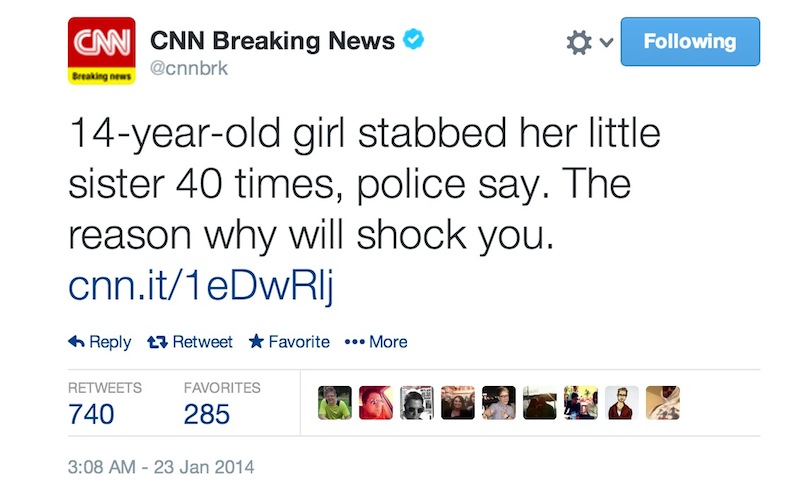
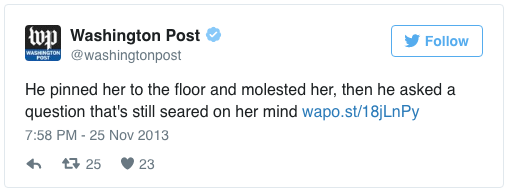
(Originally found on Hypervocal and Slate)
But internet users aren’t just mindless clicking machines, as the clickbait model implies. Each of the above tweets triggered a backlash, and the diabetes-inducing sweetness of Upworthy is starting to leave people cold. Earlier this month Facebook, which lives in constant fear of users logging off for good, updated their News Feed algorithm to show less Upworthy posts. Alison Gianotto (also known as Snipe) recently got a lot of attention for creating ‘Downworthy’, a browser extension that tones down the overly enthusiastic headlines:

Not every piece you read can be life-affirming or mind-blowing, despite what the headline says. Even if they could be, people would get bored eventually. Perhaps this ‘LOOK AT ME! LOOK AT ME!’ approach to headline writing was just what the internet needed. Now, instead of feeling compelled to look at blatant clickbaits, maybe we can learn to be disciplined enough to say ‘I don’t need to click on this’.
If 2013 was the year of viral, hopefully 2014 will be the year of FOMO’s death.
2016 Update:
It wasn’t.